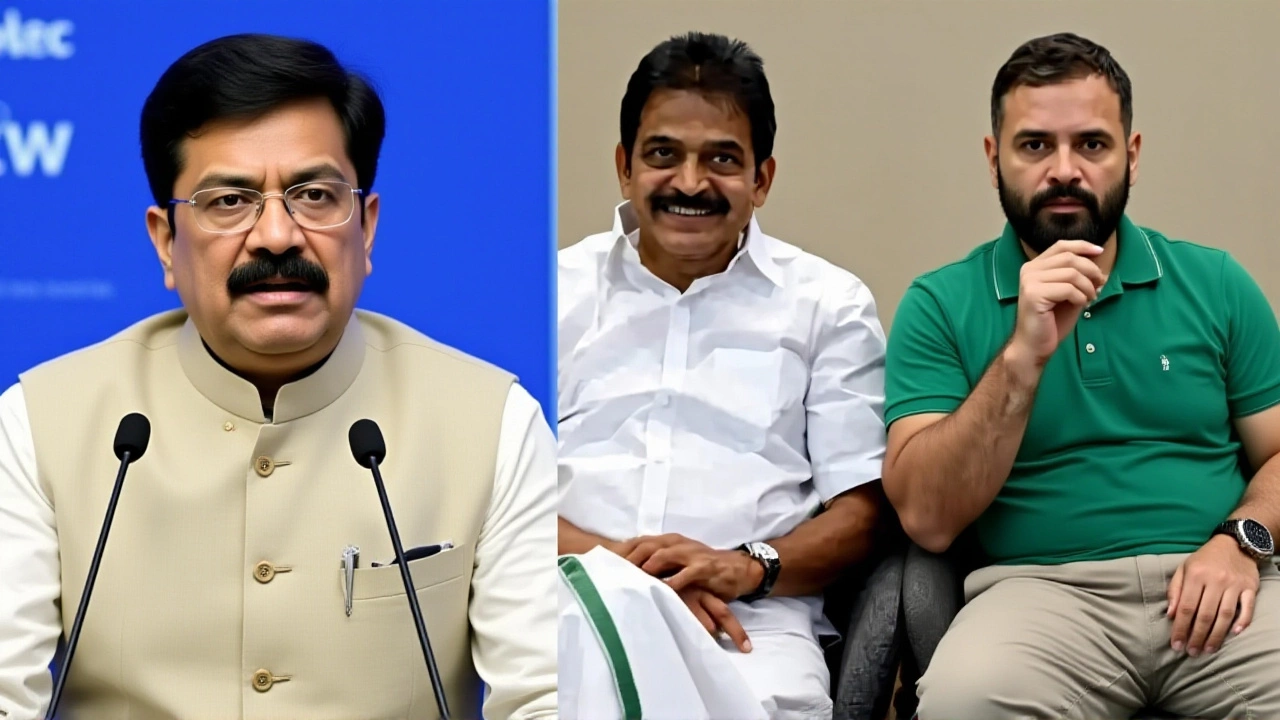
When Rahul Gandhi, Senior Leader of the Indian National Congress, addressed party insiders recently, he didn't mince words. He declared that Prime Minister Narendra Modi's exit from power is "fixed" within the next twelve months. The statement wasn't made at a massive public rally but during a closed-door session of the Congress Minority Advisory Committee. It's a bold prediction in a political landscape where the ruling Bharatiya Janata Party (BJP) has dominated headlines for years.
Here's the thing: this isn't just another campaign slogan. Gandhi tied his prediction directly to three burning issues facing ordinary Indians—unemployment, skyrocketing inflation, and widespread economic frustration. By pinpointing these specific grievances, he's trying to shift the narrative from ideological battles to daily survival struggles.
The Core of the Claim
Gandhi’s assertion rests on a simple premise: the government's inability to solve basic economic problems will force its hand. He argued that the combination of joblessness and rising prices creates an unsustainable pressure cooker. "The departure of Prime Minister Narendra Modi from power is fixed within the next one year," he stated, citing unemployment, inflation, and economic anger as the primary drivers.
This approach marks a strategic pivot. Instead of attacking policy specifics, the opposition is focusing on the emotional toll of economic hardship. For millions struggling with stagnant wages and expensive groceries, this message resonates deeply. It’s less about who is right or wrong politically and more about who can fix the wallet problem.
Inside the Closed-Door Meeting
The setting matters here. This wasn't a press conference designed for viral clips; it was an internal strategy session. The Congress Minority Advisory Committee meeting served as a sounding board for sensitive topics that rarely make it to mainstream broadcasts. Leaders discussed the Muslim community, minority politics, the BJP vs. Congress dynamic, and the politics of polarization.
During these discussions, leaders emphasized the need to strengthen Congress's messaging among the Muslim community. They agreed that the party must clearly communicate its work and its fight for rights. This internal consensus suggests a recalibration of outreach strategies, aiming to rebuild trust through consistent action rather than just rhetoric.
Key Agenda Items
- Economic Grievances: Using unemployment and inflation as central themes.
- Minority Outreach: Strengthening connections with the Muslim community.
- Polarization Debate: Analyzing how divisive politics affects voter sentiment.
- Opposition Strategy: Defining clear counter-narratives against the BJP.
The Political Landscape
But wait, why now? The timing coincides with growing dissatisfaction over economic indicators. While national growth figures often look promising on paper, ground-level reality tells a different story. Youth unemployment remains stubbornly high, and price hikes have eroded purchasing power for middle-class families. Gandhi is betting that this disconnect between macroeconomic data and microeconomic experience will become impossible to ignore.
The twist is that this claim challenges the BJP's narrative of stability and development. By predicting a specific timeline for change, Gandhi is forcing a conversation about accountability. If the economy doesn't improve significantly in the coming months, the opposition argues, the mandate will shift. It’s a high-stakes gamble that relies entirely on economic trends rather than traditional vote-bank arithmetic.
Broader Implications
This speech signals a broader shift in how the opposition plans to engage voters. Rather than relying solely on historical legacy or regional alliances, they are doubling down on current pain points. The focus on "economic anger" suggests that future campaigns will be heavily data-driven, highlighting specific statistics about jobs and costs to validate their claims.
Moreover, the emphasis on minority politics indicates an effort to broaden the coalition base without alienating other groups. By framing the issue as one of universal economic rights, the party hopes to appeal across religious and caste lines. However, balancing this inclusive message with targeted outreach to specific communities remains a delicate tightrope walk.
What's Next?
All eyes are now on the economic data releases over the next quarter. If inflation cools and job creation picks up, Gandhi’s prediction may fade into background noise. But if the trend continues downward, expect this rhetoric to intensify. The opposition is likely to ramp up local-level campaigning, focusing on district-wise economic conditions to personalize the national debate.
We’ll also see how the BJP responds. Will they dismiss the claims as defeatist talk, or will they launch a counter-offensive showcasing their economic achievements? The coming months will be critical not just for the economy, but for the political momentum leading up to future elections.
Frequently Asked Questions
What exactly did Rahul Gandhi predict about PM Modi?
Rahul Gandhi claimed that Prime Minister Narendra Modi's exit from power is "fixed" within the next one year. He based this prediction on the worsening economic conditions, specifically citing unemployment, inflation, and general economic anger among citizens as the driving forces behind this potential political shift.
Where was this statement made?
The statement was delivered during a closed-door meeting of the Congress Minority Advisory Committee. Unlike public rallies, this was an internal strategy session where party leaders discussed sensitive topics including minority politics, economic grievances, and the ongoing rivalry between the BJP and Congress parties.
Why is the Congress party focusing on the Muslim community?
Leaders at the meeting emphasized the need to strengthen Congress's messaging and presence within the Muslim community. They agreed that the party must clearly communicate its efforts and its stance on fighting for rights, aiming to rebuild trust and ensure that the community feels represented in the party's broader economic and social agenda.
What are the main reasons cited for the predicted political change?
The three primary reasons cited were unemployment, inflation (rising prices), and economic frustration. Gandhi argued that these everyday struggles are creating a level of discontent that cannot be sustained indefinitely, suggesting that voters will eventually turn away from the current government due to financial hardship.
How does this speech fit into the larger BJP vs. Congress narrative?
This speech attempts to redefine the conflict by moving away from ideological debates about nationalism or culture and focusing instead on tangible economic outcomes. By predicting a specific timeline for change, the Congress party is challenging the BJP's record of governance and positioning itself as the alternative solution to India's economic woes.
Aarav Chatterjee
I am Aarav Chatterjee, an expert in news and political analysis, with a special focus on the Indian subcontinent. I pride myself on delivering thought-provoking and insightful commentary on the latest news and events shaping Indian life. As a seasoned journalist, I have a passion for uncovering untold stories and making connections between current events and historical contexts. My writing aims to educate, inspire, and empower my readers to make informed decisions and contribute to meaningful discussions about the future of India.
view all postsWrite a comment